
Because your uterus shouldn’t be a battleground.
Periods shouldn’t hurt this much.
And yet for so many of us living with endometriosis, PCOS, or chronic reproductive pain, that’s just our normal — cramping, bleeding, bloating, fatigue, and a healthcare system that often tells us it’s “just part of being a woman.”
Let’s be clear: it’s not.
It’s pain. It’s exhaustion. It’s inflammation.
And it deserves real understanding, research, and care.
At Sapphic Self, we believe these conversations need to happen — out loud, without shame. Whether you’re free bleeding, using tampons, cups, period pants, or switching between all of them depending on the day, your period care is personal. There’s no “right way,” only the way that helps you feel safe, clean, and comfortable in your own body.
🩸 Our Personal Care Routines
For me (Tia), bleeding has been a constant companion — sometimes lasting over 200 days straight. The fatigue and frustration are unreal, especially when you’re told over and over that there’s “nothing to be done.”
There’s also the part people rarely talk about — the messy part. The soreness from constant contact with pads, the irritation, the chafing, the way everything feels damp and heavy. The way you start to feel gross and disconnected from your own body. It’s not just physical — it’s mental.
Bleeding constantly takes a toll on your confidence and sense of self.
My hormones never settle. I get acne, PMS, and mood swings that hit like a storm. And because I already have complex mental health conditions, I feel like that’s all doctors see. They ignore the rest, as if mental illness disqualifies me from being believed about physical pain. It’s exhausting — and it’s unfair.
We shouldn’t be put in boxes or dismissed because we’re complex.
We deserve full support and care, no matter our diagnoses, our identities, or our bodies.
Reusable pads and period pants have been lifesavers, both physically and mentally. I love that I can wash them, reuse them, and not feel trapped in uncomfortable materials. I’m also a fan of Daye, who make CBD-infused tampons — they really do take the edge off cramps and inflammation.
Mae’s experience is a little different. She deals with hot flushes, intense bloating, and energy crashes that hit out of nowhere. Hormonal mood swings are almost constant, and her PCOS really took insulin resistance seriously. Her neck fan is her holy grail — it’s quiet, cool, and keeps her from overheating when everything feels too much. It’s such a simple tool but makes a world of difference during hormonal flare days. She also takes an inositol supplement that does wonders for her digestion, bloating and hormonal fluxes.
Both of us swear by heat — wheat packs, heated blankets, hot baths, whatever we can get our hands on. Especially during flares, cysts, and intense cramping.
🌹What is a Period?
Communicating with others and sharing can sometimes be the best relief. Just knowing you aren’t alone, or hearing how someone else deals with it can change everything.
Health and reproduction education is not always reliable; a lot of people are left in the dark or with inadequate information about their own bodies.

Premenstrual syndrome (PMS) – refers to physical and psychological symptoms occurring prior to menstruation.
Dysmenorrhea – painful cramps during menstruation.
Endometriosis – a condition in which cells similar to the lining of the uterus, or endometrium, grow outside the uterus. Endometriosis often involves the pelvic tissue and can envelop the ovaries and fallopian tubes. It can affect nearby organs, including the bowel and bladder. You can expect chronic pain, extreme fatigue, and fertility issues.
PCOS (Poly Cystic Ovary Syndrome) – a hormonal disorder in women that causes irregular periods, excess androgens (male hormones), and polycystic ovaries. Symptoms include acne, hair growth, and weight gain, and it can increase the risk of developing other conditions like type 2 diabetes and heart disease.
Premenstrual dysphonic disorder (PMDD) – a severe mood disorder affecting women, characterized by significant emotional and physical symptoms that occur two weeks before menstruation and improve shortly after it begins. Caused by an abnormal sensitivity to normal hormone changes, it is distinct from premenstrual syndrome (PMS) due to the severity and disruptive nature of its symptoms, which can include intense anxiety, depression, irritability, and even suicidal thoughts.
(We know there are many other health conditions associated with female reproductive health, and by no means do we want to exclude you. Mae is already fighting not to overload this post with too many tangents)
Most people know about common menstruation symptoms like bloating, abdominal cramps, mood swings, acne, and food cravings. But there’s so much more that can go on in your body, as a result of the hormone changes and blood loss, that we don’t always talk about.
For us, we experience fatigue, headaches, breast tenderness, difficult sleeping, joint subluxations, pain that radiates to our back and down our thighs, and exacerbations of our chronic health conditions. Everything shifts and moves further away from “normal”. It’s a lot to deal with.
🌡️ What Helps — and Why
Everyone’s management toolkit looks different, but here’s what helps us (and what others in our community shared):
- Hot herbal baths — magnesium flakes, bath salts, and herbs like chamomile, sage, or mugwort help ease muscle tension and relax your body.
- CBD or infused oils — soothing blends can reduce inflammation and pain when massaged into the abdomen or thighs.
- Herbal teas — raspberry leaf, chamomile, peppermint, and ginger support relaxation, hormone balance, and circulation.
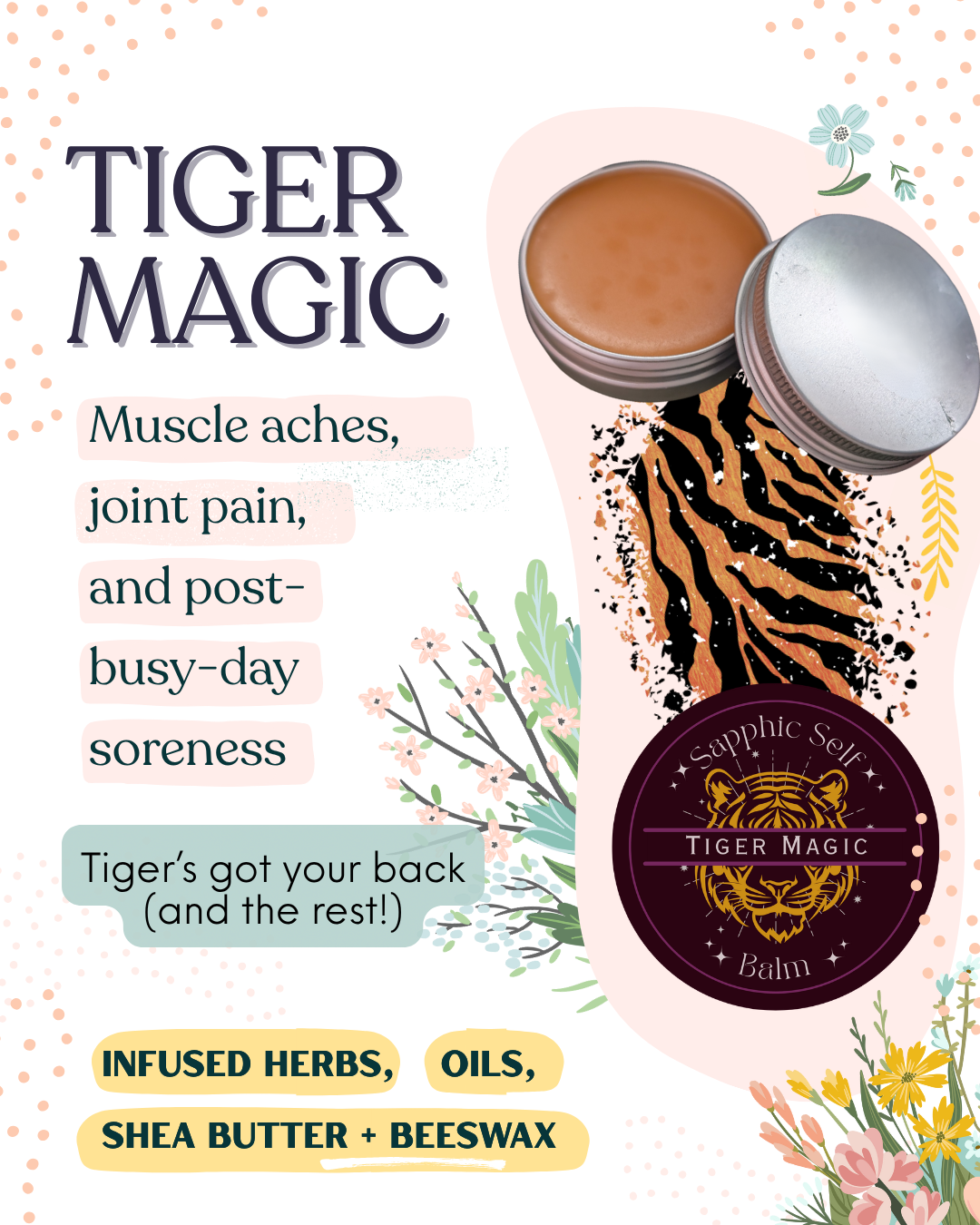
- Body balms like Tiger Magic or Tough Love — these calm inflammation, warm tight muscles, and soothe sore skin.
- Free bleeding or earth bleeding — letting your body release naturally, without restriction, can be healing when it feels safe and comfortable to do so.
- Hydration & minerals — electrolytes, broths, juices, and iron-rich foods help replace what’s lost during long bleeds.
- Neck fans & cooling aids — especially for hormonal flushes and heat spikes.
- Rest and softness — loose clothing, fresh sheets, and forgiving plans.
- Heat – wheat bags, hot water bottles, heated blankets, heated seats, hot showers… literally anything warm
- Mindfulness – therapy skills, especially emotional regulation skills, are very useful when your hormones are haywire. Even if it’s just to bring you back down from acting like a prey mantis.
And for days when the pain wins? You rest. You breathe. You stop apologising for what you can’t do — and remember you’re doing everything you can.


🛁 Our Favourite Sapphic Self Helpers
✨ Banish & Begin Bath Spell — sage, thyme, bay, and eucalyptus ease cramps, inflammation, and emotional heaviness.
💗 Love Bath Spell — rose, calendula, cinnamon, and orange restore warmth, comfort, and connection to your body.
🧴 Tough Love Balm — turmeric and calendula soothe sore skin and help heal irritation from pads or chafing.
🐅 Tiger Magic Balm & Massage Bar — gentle heat and circulation support for tight muscles and cramps.
🌸 Flour Fresh Scrub — soft exfoliation and skin relief for sensitive, easily-irritated skin.
💧 Magnesium Flakes — calming, tension-relieving, and perfect for soaking out the ache.
We built these with our own bodies in mind; and we use them, every month, every flare, every “I can’t move” day.
💬 Let’s Talk About It
This isn’t taboo.
Our periods, our reproductive pain, our messy, complicated bodies — they deserve to be seen, studied, and supported.
For too long, women and AFAB people have been told to just cope, to tough it out, to live quietly with it. The truth is: medicine and research are still catching up, and that’s why we share what works — with honesty and care.
For centauries, womankind shared their wisdom with each other to make health conditions and menstruation manageable. They had boundless knowledge, herbal wisdom, and medicinal practices that were passed on from generation to generation. Somewhere, society lost that magic of shared experience and communication.
Although many women feel failed by the NHS and healthcare systems around the world, we know that women’s health remains underfunded, under-researched, and under-supported. And while we at Sapphic Self can’t fix that alone, we can support, discuss, and fight alongside anyone with a uterus to get the relief and respect they deserve.
We’re constantly researching and testing product ideas as part of our own symptom relief journeys, and we feel so blessed to be able to share what helps with others. Let’s not gatekeep comfort — we all need one another.
We encourage everyone to join the conversation.
Share what helps you, ask the “taboo” questions, and free yourself from the stigma of a body that’s just doing what it needs to do. Nothing about this is wrong.
We all live in the hope that one day, women’s pain will be taken seriously — and until then, we’ll keep learning, sharing, and standing together.
That’s what Sapphic Self means to us:
Loving the feminine, in yourself and others.
Loving the body you live in — whether it’s messy, hormonal, or healing.
Loving yourself fully, as you are.